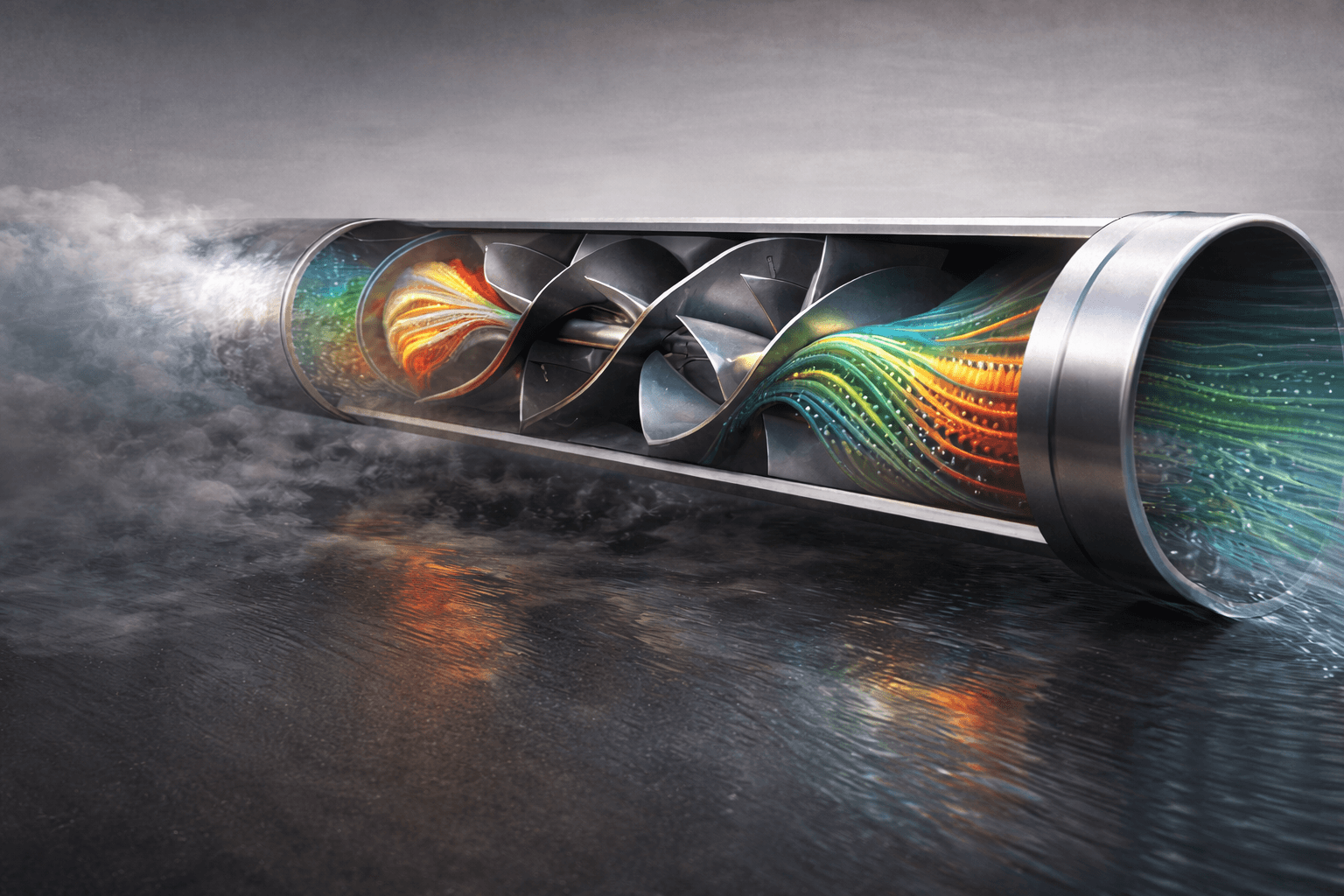
Simulation-driven optimization: faster design decisions with surrogate models
When design iteration is expensive, coupling simulation with optimization can shrink the search space dramatically.
Updated: 2026-01-02 · ~5 min read

The situation
Many engineering teams iterate by intuition: change a parameter, re-run, compare. That works—until each run is expensive and the design space is large. Then progress stalls.
Why it matters
Without defensible performance understanding, teams risk:
- Slow convergence to acceptable designs
- Missed high-performing regions of the design space
- High compute cost with low learning per run
- Late-stage surprises when a "better" design existed nearby
What analysis changes
A focused simulation study can help answer decision-level questions such as:
- Identify which variables actually matter
- Approximate performance quickly using a trained surrogate
- Produce a ranked set of candidate designs with justification
- Provide explainable sensitivities, not just a "best point"
Typical approach
- Define objective(s) and constraints (what "better" means).
- Choose a minimal sampling plan (DOE) and generate simulation data.
- Train a surrogate model and validate it where it matters.
- Run optimization on the surrogate and confirm top candidates with full simulation.
Deliverables
- Sensitivity ranking and response trends
- Surrogate model suitable for "what-if" exploration
- Shortlist of candidate designs + verification runs
- Repeatable workflow (automation scripts if appropriate)
Common pitfalls
- Optimizing without clear constraints (produces unusable solutions)
- Poor sampling strategies (garbage surrogate)
- Treating optimization as a black box without validation
Learn more about what we help resolve and how engagements work.
FAQ
Is this only for CFD?
No—any expensive model (thermal, structural, multiphysics) can benefit.
Do we need dozens of runs?
Not necessarily. The point is to maximize learning per run.
What's a good first milestone?
A sensitivity map and a surrogate that's accurate enough to guide direction.
Tags:
OptimizationSurrogate modelsAutomation